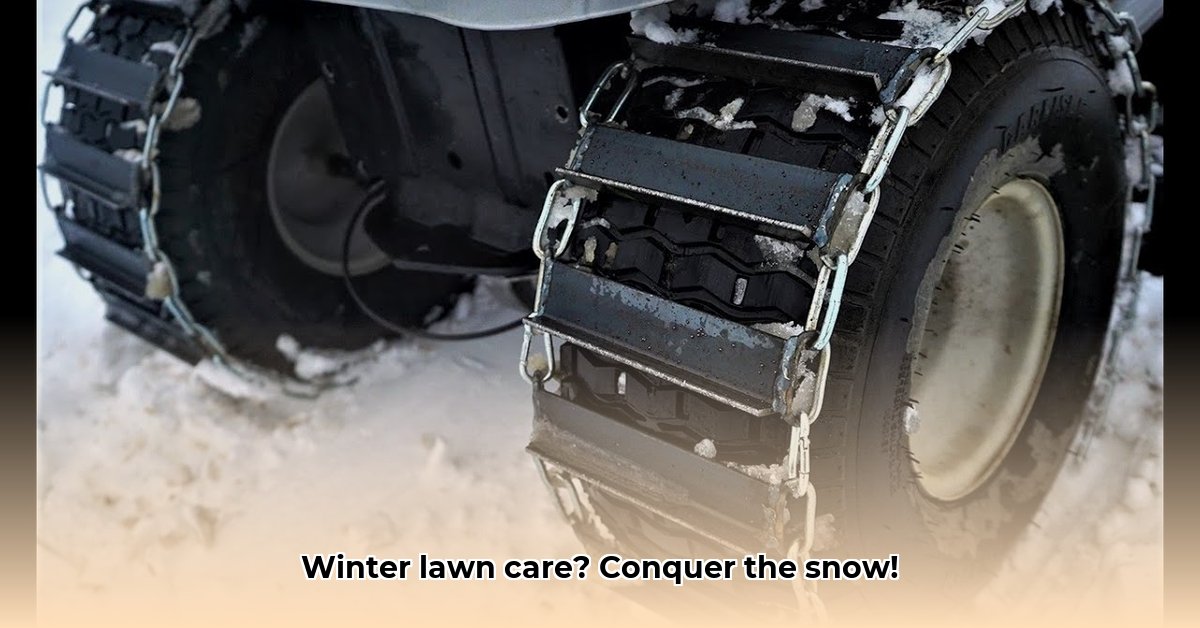
Winterizing your lawn tractor doesn't have to mean putting it into hibernation. With the right snow chains, you can maintain a clear lawn and tackle winter chores safely and effectively. This comprehensive guide will help you choose, install, and maintain snow chains for your lawn tractor, transforming your machine into a winter workhorse. For help determining the correct tire size, check out this helpful tire size chart.
Choosing the Right Snow Chains
Selecting the appropriate snow chains depends on several factors, most importantly the severity of the winter conditions you anticipate.
Chain Types and Their Applications
The type of snow chain you need directly correlates with the conditions you'll face. Choosing the wrong type can lead to poor traction or even damage to your tractor.
Ladder Chains: Ideal for light snow and icy patches. These are the most budget-friendly and easiest to install, offering decent traction for milder winter conditions. Think of them as your reliable winter "training wheels."
Diamond Chains: Provide superior grip compared to ladder chains, excelling in moderate to heavy snow and icy conditions. These chains offer a good balance between traction and ease of installation. The interlocked diamond pattern effectively sheds snow and ice.
V-Bar Chains: Engineered for maximum traction in heavy snow and consistently icy conditions. They provide significantly enhanced grip but are generally more expensive and slightly more challenging to install than diamond chains. Consider these your "all-weather" option.
Ring Chains: Reserved for extreme conditions – deep snow or severe ice. These offer unmatched traction but are the most complex to install and can put more wear on your tires. They are best suited for deep drifts and severe winter storms, and should be used only when necessary.
Comparing Chain Features: A Detailed Overview
This table highlights the key differences between chain types to aid in your selection:
| Chain Type | Traction | Durability | Installation Difficulty | Price Range | Suitable Conditions |
|---|---|---|---|---|---|
| Ladder | Good | Good | Easy | Budget-Friendly | Light snow, icy patches |
| Diamond | Very Good | Good | Moderate | Moderate | Moderate to heavy snow |
| V-Bar | Excellent | Good | Moderate | Moderate to Expensive | Heavy snow, deep ice |
| Ring | Excellent | Very Good | Difficult | Expensive | Extreme snow, deep drifts |
(Price ranges are estimates and can fluctuate depending on brand and specific features.)
Installing Your Snow Chains: A Step-by-Step Process
Proper installation is critical for both safety and chain efficacy. Incorrect installation can lead to poor traction, tire damage, or even accidents. Follow these steps meticulously:
Tire Compatibility: Always confirm that the chains are compatible with your lawn tractor's tire size. This information is clearly printed on the chain packaging. Improper sizing is the most common installation mistake.
Tire Preparation: Thoroughly clean your tractor tires, removing mud, ice, snow, or debris. Clean tires ensure proper chain seating.
Manufacturer's Instructions: Each chain type has unique installation procedures. Always refer to the manufacturer's detailed, illustrated instructions included with your chains. Take your time and follow these precisely.
Initial Test: After installation, perform a short test run in a clear area. Check for unusual noises, vibrations, or chain rubbing against the tractor body. Adjust as needed to ensure a secure fit. This is a crucial step often overlooked.
Regular Tension Checks: During operation, intermittently inspect and adjust the chain tension. Loose chains are ineffective and potentially dangerous. Maintain a snug fit without over-tightening.
Maintenance and Storage: Extending the Life of Your Chains
Proper maintenance significantly impacts chain longevity and effectiveness.
Post-Use Cleaning: After each use, thoroughly clean the chains, removing all mud, ice, and debris. This prevents rust and corrosion.
Storage: Store chains in a dry, preferably indoor, location to protect them from the elements and extend the life of your investment.
Regular Inspection: Before each winter season, inspect chains for wear or damage. Replace any damaged or worn links immediately. Even a small tear can compromise traction safety.
Troubleshooting Common Issues
Despite careful installation, some problems might arise.
Chains Too Tight: If the chains are excessively tight, loosen them slightly. Over-tightening can damage both the chains and the tires.
Chains Too Loose: If the chains are loose, tighten them according to the manufacturer's instructions. Loose chains offer drastically reduced traction.
Chains Hitting the Tractor Body: This indicates improper installation or a poor fit. Consult the manufacturer's installation guide and carefully re-install the chains.
By following this guide diligently, you'll effectively prepare your lawn tractor for winter, ensuring safe and efficient operation throughout the season. Remember, safety should be your top priority.